Optimizing ERP UX
BW2's core ERP system had grown into something technically capable but difficult to navigate in practice. Companies managing supply chain, logistics, and finance across multiple departments depended on it daily, but the system's usability had not kept pace with its capabilities. The result was slow onboarding, user workarounds, and a product that was hard to position competitively.
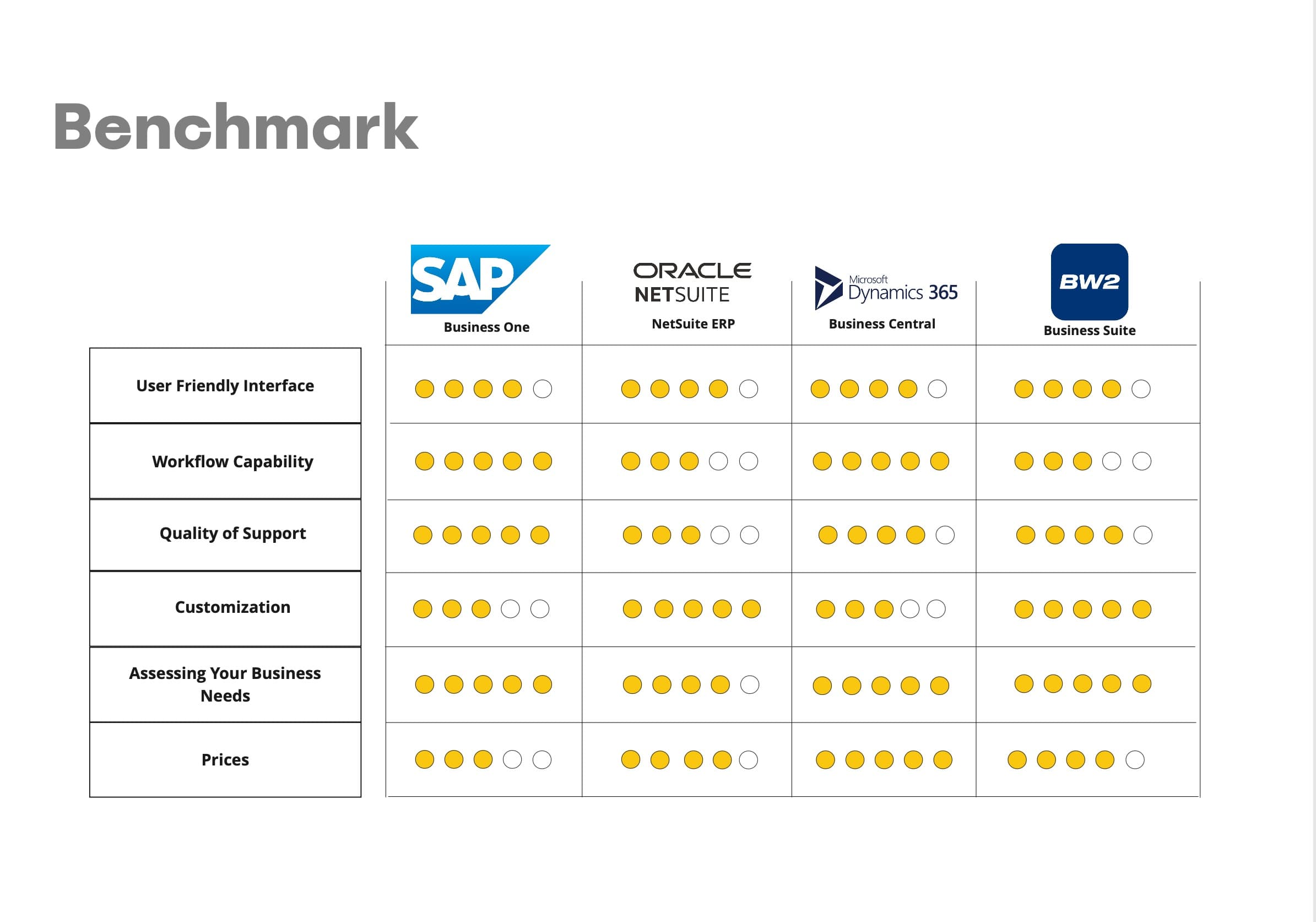
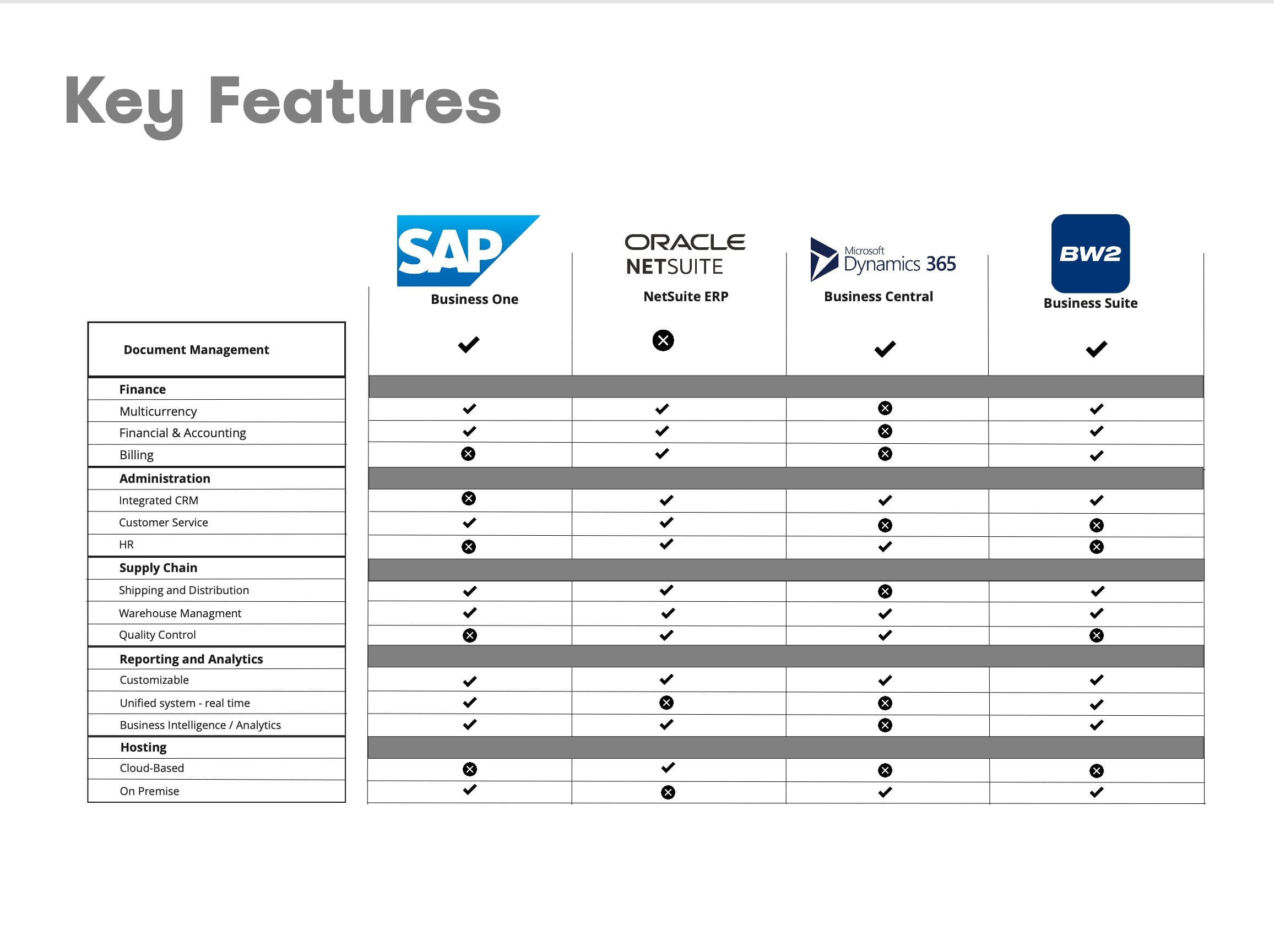
I led the UX strategy and product redesign, starting from discovery. That meant mapping pain points with internal stakeholders across supply chain, logistics, and finance, not collecting complaints, but understanding the decisions people were trying to make and where the interface was preventing them from making those decisions confidently. I benchmarked BW2 against SAP Business One, Oracle NetSuite, and Microsoft Dynamics 365 to identify competitive gaps and prioritize design principles worth adopting.
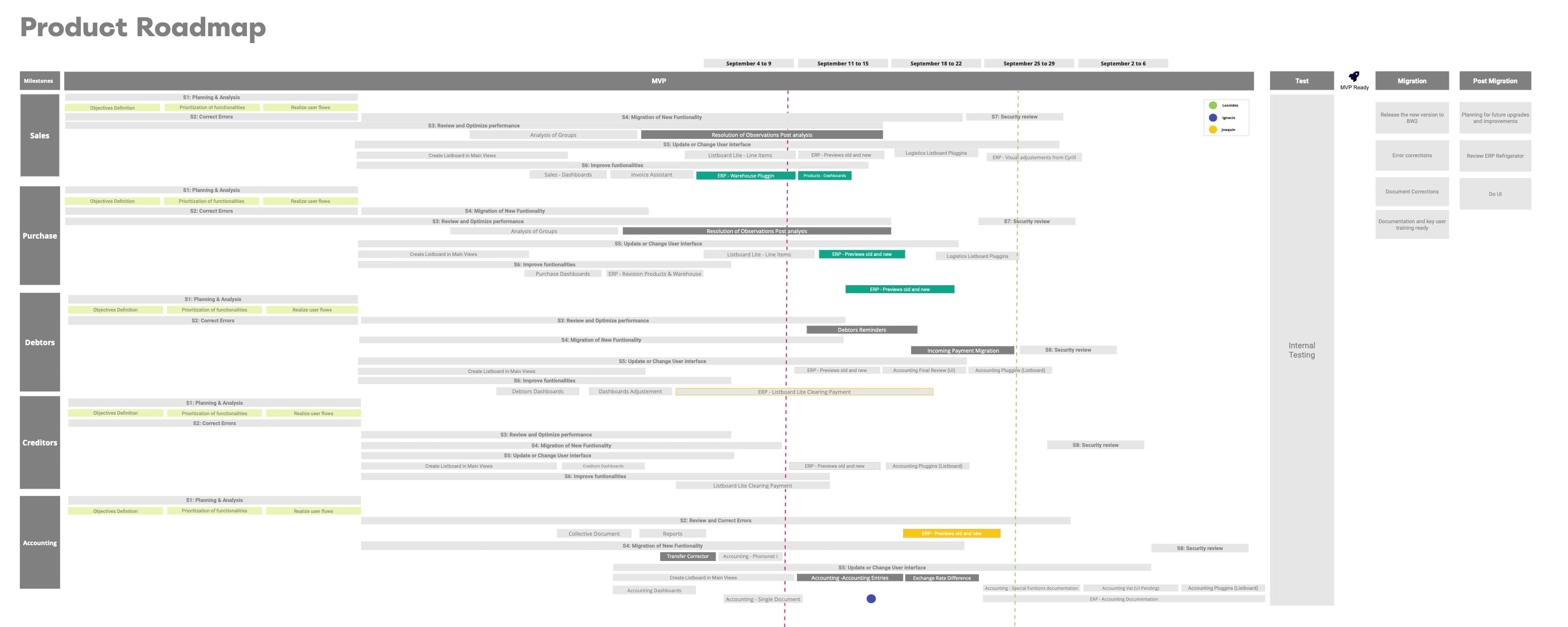
From there I defined a modular roadmap organized into three tracks, product, UX, and code, that enabled structured implementation without disrupting what was already working.
ERP end to end
The ERP had grown technically capable but was difficult to navigate. Users across supply chain, logistics, and finance depended on it daily but could not make confident decisions using the interface.
Understanding the decisions people were trying to make, rather than just collecting complaints, would reveal design principles worth adopting across the whole system.
Mapped pain points with internal stakeholders across departments; benchmarked BW2 against SAP Business One, Oracle NetSuite, and Microsoft Dynamics 365 to identify competitive gaps and prioritize design principles.
Defined a modular roadmap organized into three tracks (product, UX, code) that enabled structured implementation without disrupting what was already working.
Teams had a shared language for what the product needed to become. Implementation moved in a coordinated direction for the first time.
Takeaway
Customization is not a feature. It is a relationship. The best internal tools are the ones that disappear into the work.