Research At Doctolib
Doctolib's international research and design teams needed stronger operational support to scale research studies, ensure legal compliance, and foster cross-country collaboration between Germany, France, and Italy. When product teams are ready to conduct research, they often hit bottlenecks regarding logistics and strict participant criteria. My role focused on unblocking these processes so that research could move forward without friction.
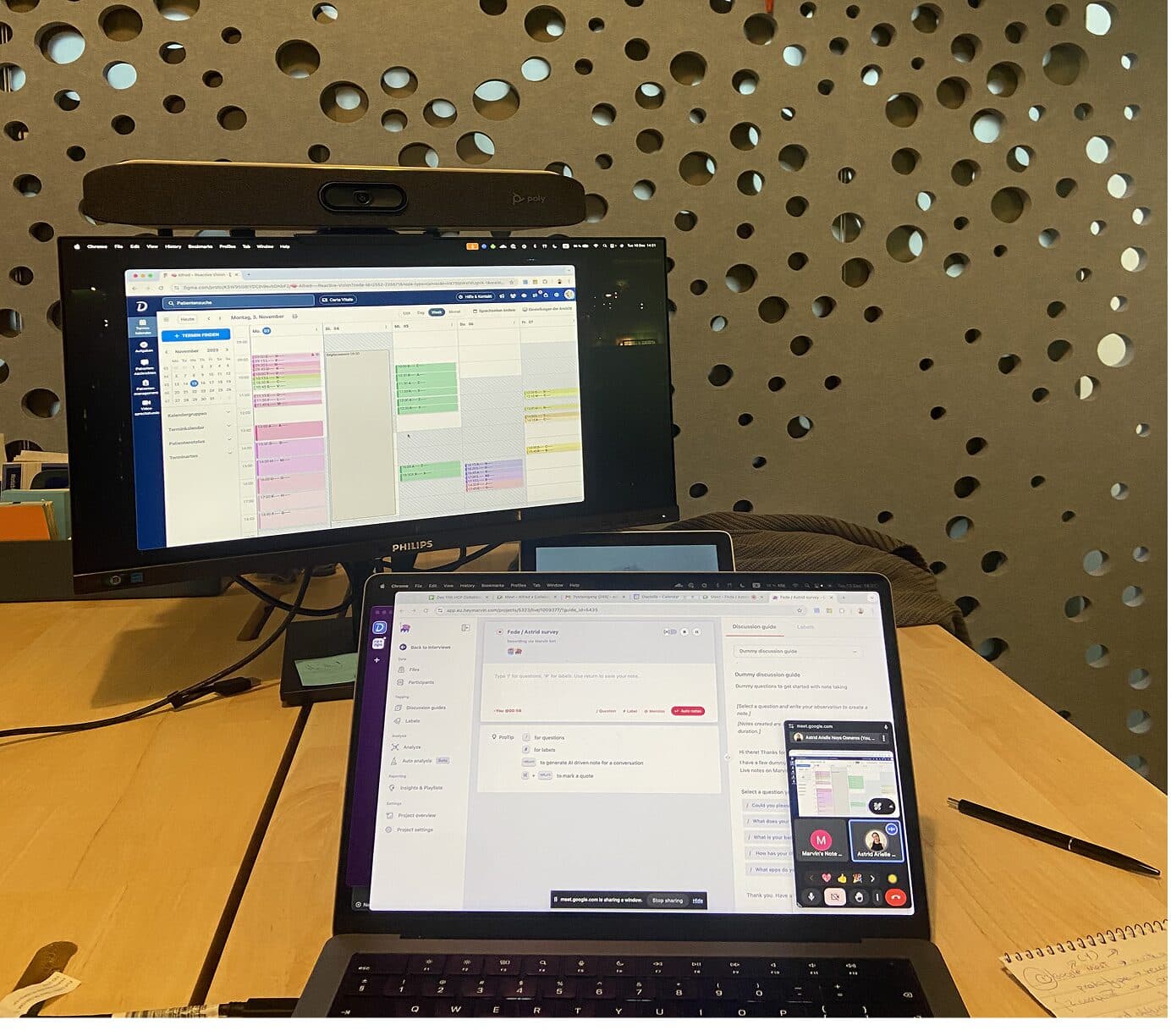
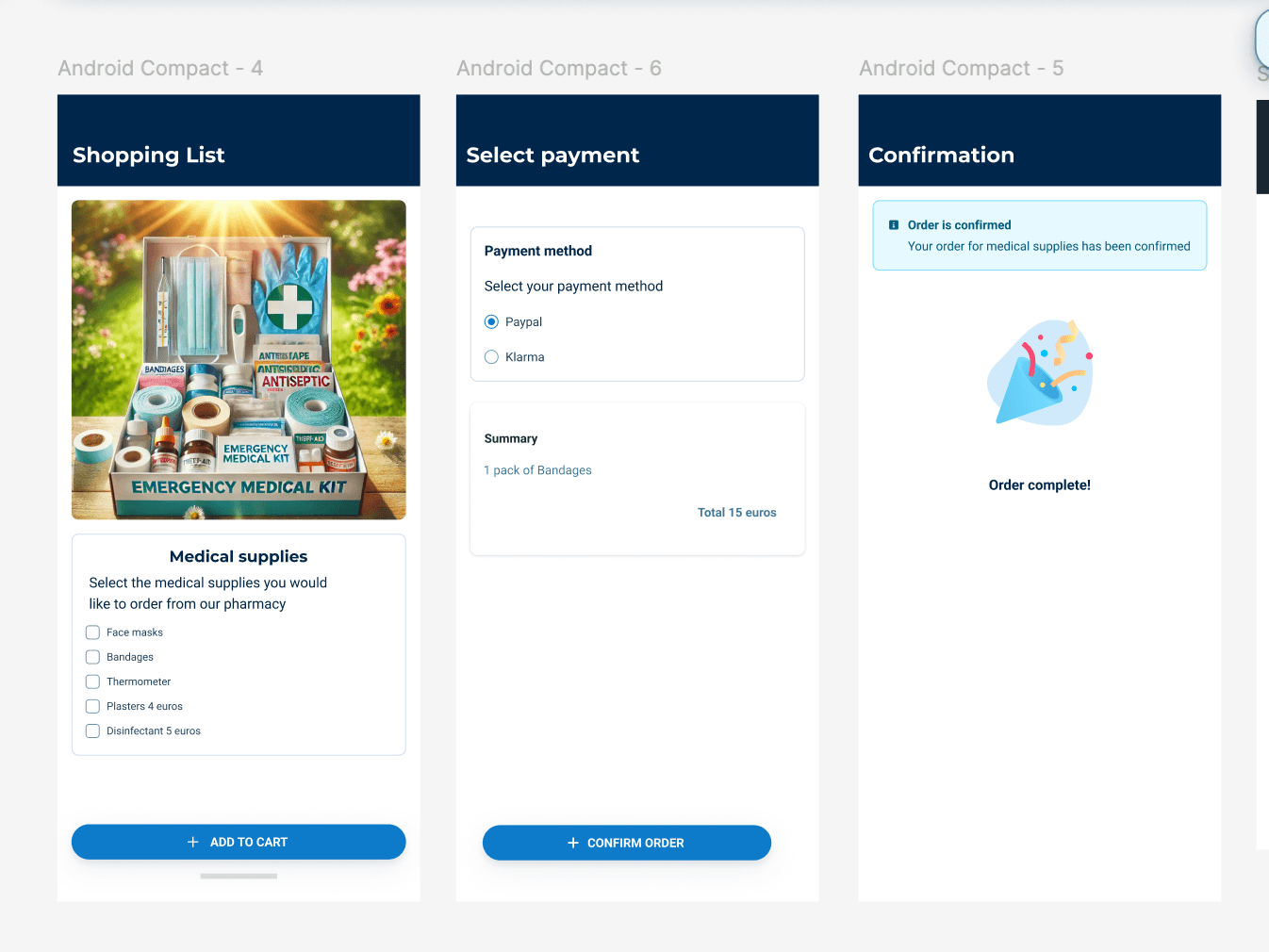
I managed over 18 concurrent research projects simultaneously, building the recruiting infrastructure, compliance workflows, and scheduling systems that transformed a bottlenecked process into a reliable operational engine. Working closely with Legal, Finance, and product teams, I developed reusable frameworks that did not just unblock individual studies but permanently raised the operational floor for the entire Design Ops practice. In parallel, I participated in debriefing sessions and contributed to the discovery and concept validation of Alfred, Doctolib's conversational AI assistant, supporting user validation and concept testing with patients and medical staff in the German market.
Research Ops
Research studies lacked operational infrastructure, creating bottlenecks in recruitment, compliance, and logistics across four countries.
Building reusable coordination frameworks would allow research to scale without adding headcount.
Mapped existing workflows with Legal, Finance, and Product; identified failure points in participant recruitment and GDPR compliance handling.
Built recruiting strategies for highly specific medical profiles, managed scheduling, screened participants, and streamlined administrative logistics across Germany, France, and Italy.
Research operations became a reliable, scalable engine. Studies moved forward without delays caused by operational gaps.
Alfred AI
Alfred was built in France and designed for a French-speaking market. It was unclear whether the interface language, terminology, and interaction patterns would translate meaningfully for German healthcare professionals.
German medical staff would encounter friction not from the core functionality, but from localization gaps where French product assumptions did not map onto German clinical workflows or communication norms.
Conducted research sessions in German with healthcare professionals, evaluating whether the interface wording, flow, and terminology matched how German clinicians think and communicate in practice.
Synthesized findings into actionable localization recommendations covering UI copy, terminology adjustments, and interaction patterns specific to the German market.
The product team had a validated, market-specific input to inform the German rollout, reducing the risk of adoption failure due to localization mismatches rather than functional ones.
Design
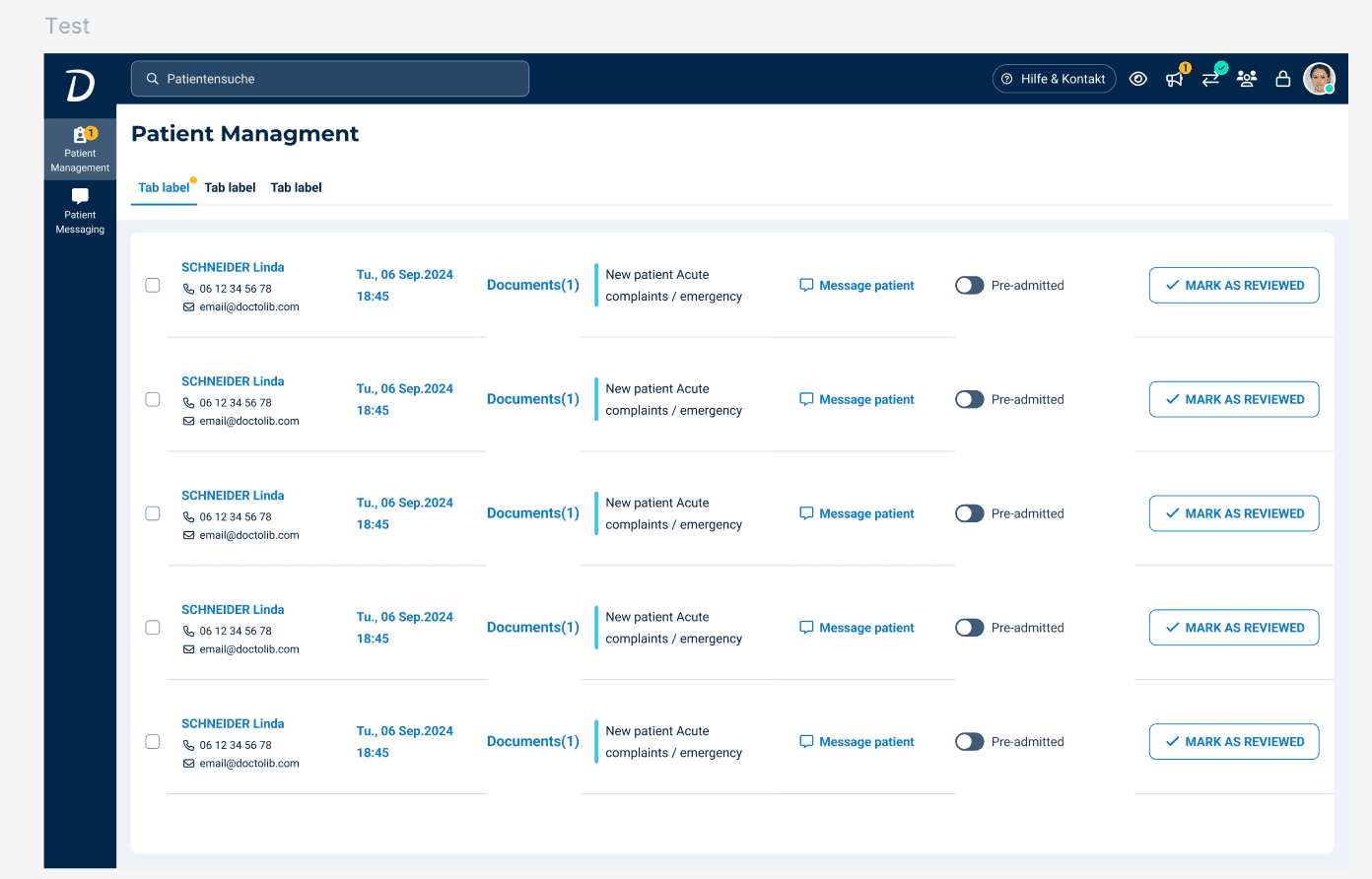
Shadowed product designers and participated in design system sessions, developing hands-on skills in Figma, auto-layout, and component-based design.
This was my entry point into design as a practice. Seeing how designers think about components, consistency, and handoff changed how I approach product work and gave me a shared language with design teams that I use every day.
Takeaway
Before this role, I had not fully understood the strategic weight of operational clarity. Identifying bottlenecks and building infrastructure that lets research move freely is not a support task. It is what makes good product decisions possible. Logistics are the foundation on which everything else is built.