Rethinking First Aid Access
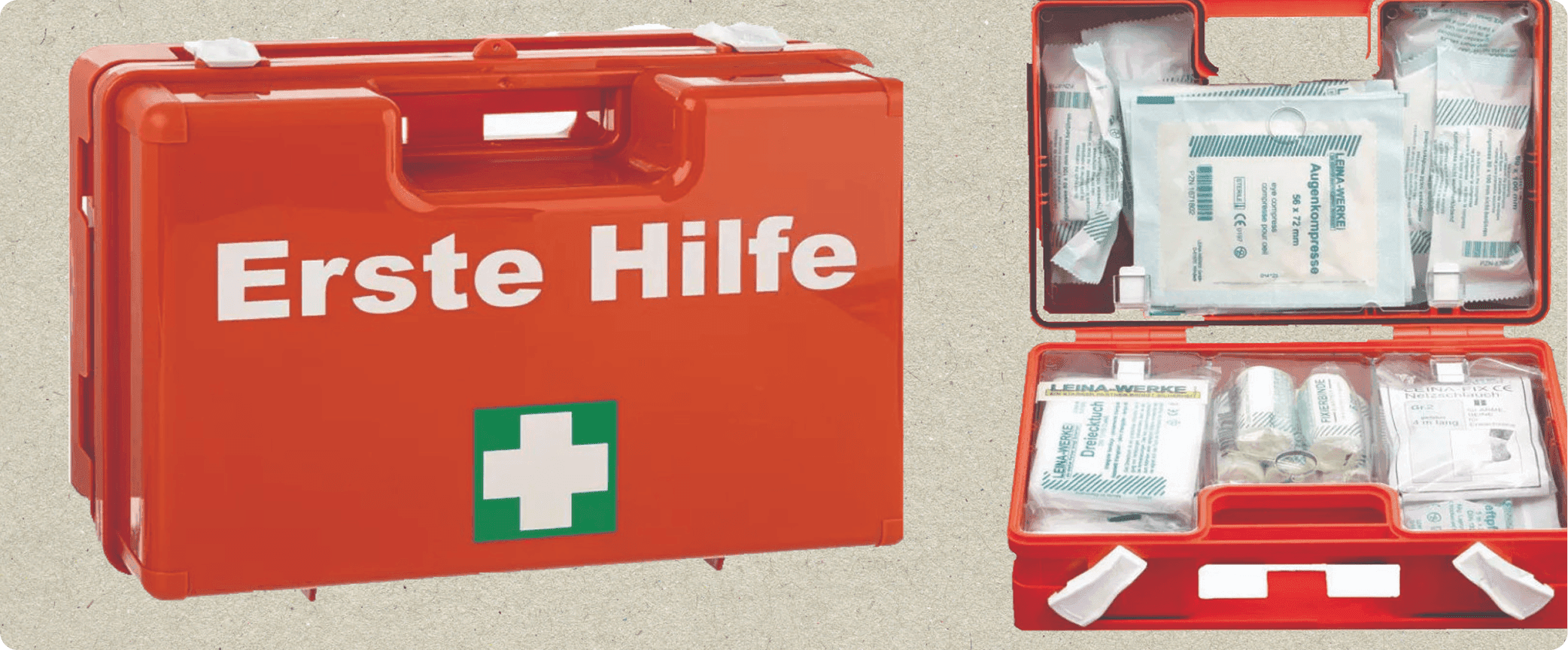
In Germany, DIN 13169 first aid boxes are legally required in workplaces and public institutions. They are equipped solely for physical injuries. Mental health emergencies are completely unaddressed, and that absence is not an oversight. It reflects how psychological distress has historically been treated as invisible within public safety systems.
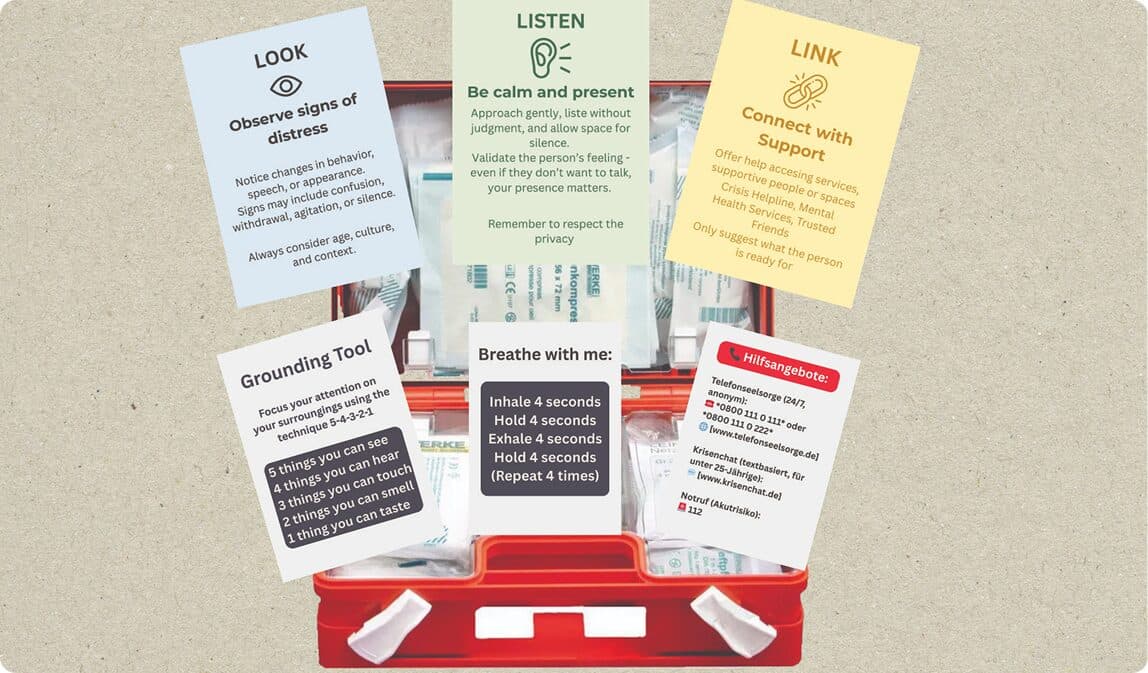
This project started from that gap. Drawing on my clinical background in psychological first aid and my training in system design, I developed a Mental Health First Aid layer: a set of accessible cards designed to be added to existing first aid kits. The cards translate complex WHO mental health guidelines into a simplified four-step framework, Look, Listen, Link, and Grounding, designed to reduce cognitive load during stressful moments and give laypeople a clear, calm way to respond.
The design language was deliberate. Each card is inexpensive, compact, and visually calming, prioritizing clarity and emotional tone over clinical density. The intervention does not replace professional care. It fills the gap between a crisis moment and the point at which professional support becomes available.
Key Contributions
Designed a Mental Health First Aid layer, translating WHO guidelines into a four-step framework to be added to existing first aid kits.
Combining clinical knowledge with system design thinking showed me that the most powerful interventions are the ones that work within existing infrastructure, not against it.
Takeaway
This project sits at the intersection of my two practices. The clinical knowledge informed what the cards needed to say. The product and system design thinking shaped how they needed to work within an existing infrastructure without requiring anyone to change a habit or adopt a new tool. Sometimes the most effective intervention is the one that fits inside what already exists.